
You Are the Intervention
Jul 24, 2026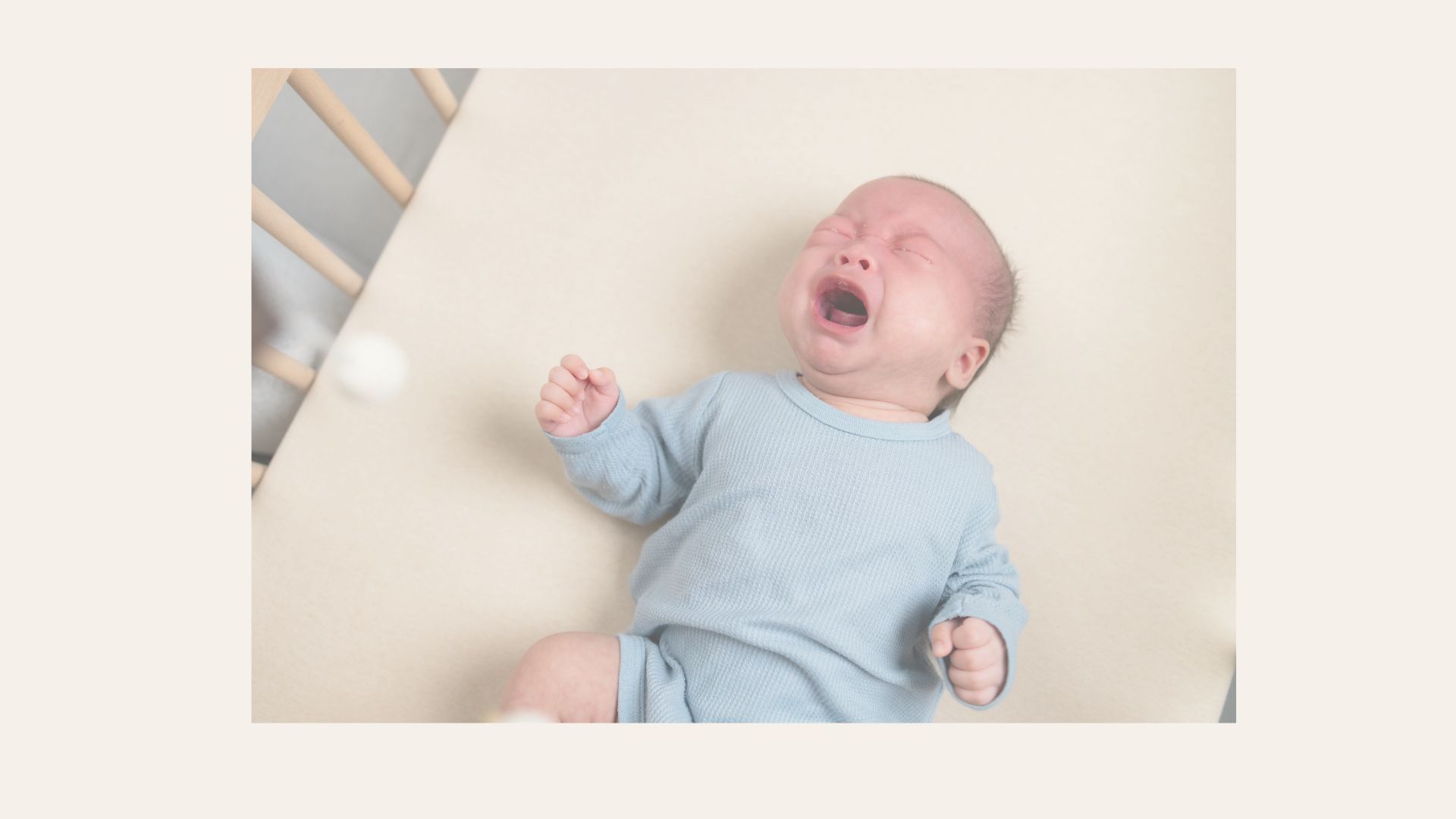
I left my baby to scream himself to sleep.
He was five months old. I couldn't even stay in the house. I went to the end of the garden, as far away from that sound as I could physically get, and my husband came out and handed me a large glass of wine. That was my only numbing strategy at the time. My chest was tight. My hands were shaking. Every instinct I had was screaming go to him.
I didn't go to him.
This was the Gina Ford and Jo Frost era. The experts said don't go in, or he'll never learn to self-soothe. So I stood at the end of that garden, sleep deprived and confused, overriding my own biology because I didn't have the confidence to go against the people who apparently knew better than me.
He gave up after one night. Stopped crying. Went quiet.
I remember feeling relieved. It had "worked."
It took me years to understand what he actually learned that night, at five months old: no one is coming. And a few years after that, the naughty step arrived, my toddlers sent off alone to sit with shame, confused about what they'd done wrong, learning that big feelings get shut down fast and dealt with in isolation.
I did what I did because I didn't have the knowledge or the confidence to do anything different. I've chosen not to beat myself up about that. What I wish is that I had had the knowledge, to choose differently, right from the start.
I got a message this week from a mum in our community, and it took me straight back to the end of that garden.
What She Told Me
Her child struggles with anxiety. She'd been referred to the mental health team and put on an NHS parent-led CBT course. The approach: reward the child once they've achieved a goal related to whatever they're anxious about.
She hadn't tried it yet. But she had doubts, and she put her finger on something important: there wasn't just one thing her child was anxious about. There were safety behaviours everywhere, places not gone, things not done, situations quietly avoided, and picking off one target behaviour at a time felt, to her, like it would take forever to make any real dent in it.
That's a mother watching her child's whole world shrink, being handed a plan that treats it as one behaviour at a time, and she instinctively knows the maths doesn't work.
Here's what I told her.
The Two Directions of Travel
Reward-based, behaviour-led approaches work from the outside in. You target the output, the refusal, the avoidance, the meltdown, and reward a different response. Do the hard thing, get the reward. Over time, hope the rest follows.
It can help. It's what's currently on offer. It isn't wrong.
But we think it starts at the wrong end.
We tend to judge anxiety by the behaviour we see: the meltdown at the school gate, the refusal to get in the car, the same reassurance question asked for the tenth time, the food that suddenly can't be eaten. But behaviour is only the output. Underneath it are thoughts, feelings, and a stress response running a whole architecture of safety behaviours: the checking, the avoiding, the reassurance-seeking, the routes not taken, the doors not walked through. The visible behaviour is just the tip of the iceberg. You can chip away at it, and it can help, but the mass of what's actually driving it sits underneath, untouched. Reward the tip away and the system just finds another way to stay safe, because you haven't touched what's generating it in the first place. You've treated a symptom while the source keeps producing new ones. That's exactly what she was sensing when she told me it felt like it would take forever to get anywhere.
Our work goes after the mass under the surface: the cause. The thoughts, the feelings, the stress response underneath the behaviour, and what's shaping that. That means helping a child understand what's actually happening in their own body and mind when the stress response fires, and giving them real tools to deactivate it, not just wait it out or push through it for a reward. That's a skill. It can be taught, and it's a core part of what we teach in the course.
But a child doesn't learn to deactivate a stress response in isolation. It's also influenced by the child's environment, and how emotionally safe they feel day to day. That safety is built through connection and co-regulation with an adult who understands what's driving the behaviour, not one focused on rewarding the changed behaviour itself.
The Bit the Textbooks Skip
Here's the mechanism worth understanding properly, because it changes how you see your own role in this.
A dysregulated child's stress response doesn't calm down through logic. You cannot reason a body out of a threat state. That's not how the biology works. What calms a stress response is co-regulation: proximity to an adult whose own stress response is regulated. This isn't a soft idea. It's measurable. Research into mother-child physiological synchrony, work like Ruth Feldman's on biobehavioural synchrony, has shown that a parent's own physiological state (heart rate, cortisol, arousal) can entrain a child's, in real time, from infancy onward. Your child's system is reading yours, constantly, as data about whether the world is safe right now.
Which means your own regulation matters more than any single strategy aimed at your child.
It's biology. And it's empowering, because it means you have a lever your child's condition doesn't take away from you.
Trust What You Already Know
I'm not saying the CBT course is wrong. I'm not saying the NHS pathway is wrong. It works for a lot of children.
What I'm saying is this: if you're doing everything you're told, and something in you still says this isn't going to reach it, don't override that instinct the way I overrode mine at the end of that garden. You are not the problem in this equation. But you are the intervention. You go first.
Nobody teaches mothers this. We're taught the strategies, the star charts, the reward systems, but not the biology of why our own state is the thing our child's system is orienting to every single day, and not how to help our child deactivate their own stress response either. You already feel this. You just haven't had the framework that tells you it's real.
That's what The Leadership Method gives you: a way of understanding the biology, yours and theirs, and practical tools to work with both, so you stop reacting to the symptom and start working with the cause.
The Leadership Method: £149 until the end of this month, then £149 to £249.
Contact Us!
Join our mailing list to receive the latest news and updates from our team.
Don't worry, your information will not be shared.
We hate SPAM. We will never sell your information, for any reason.