
Who's actually raising your child?
Oct 23, 2026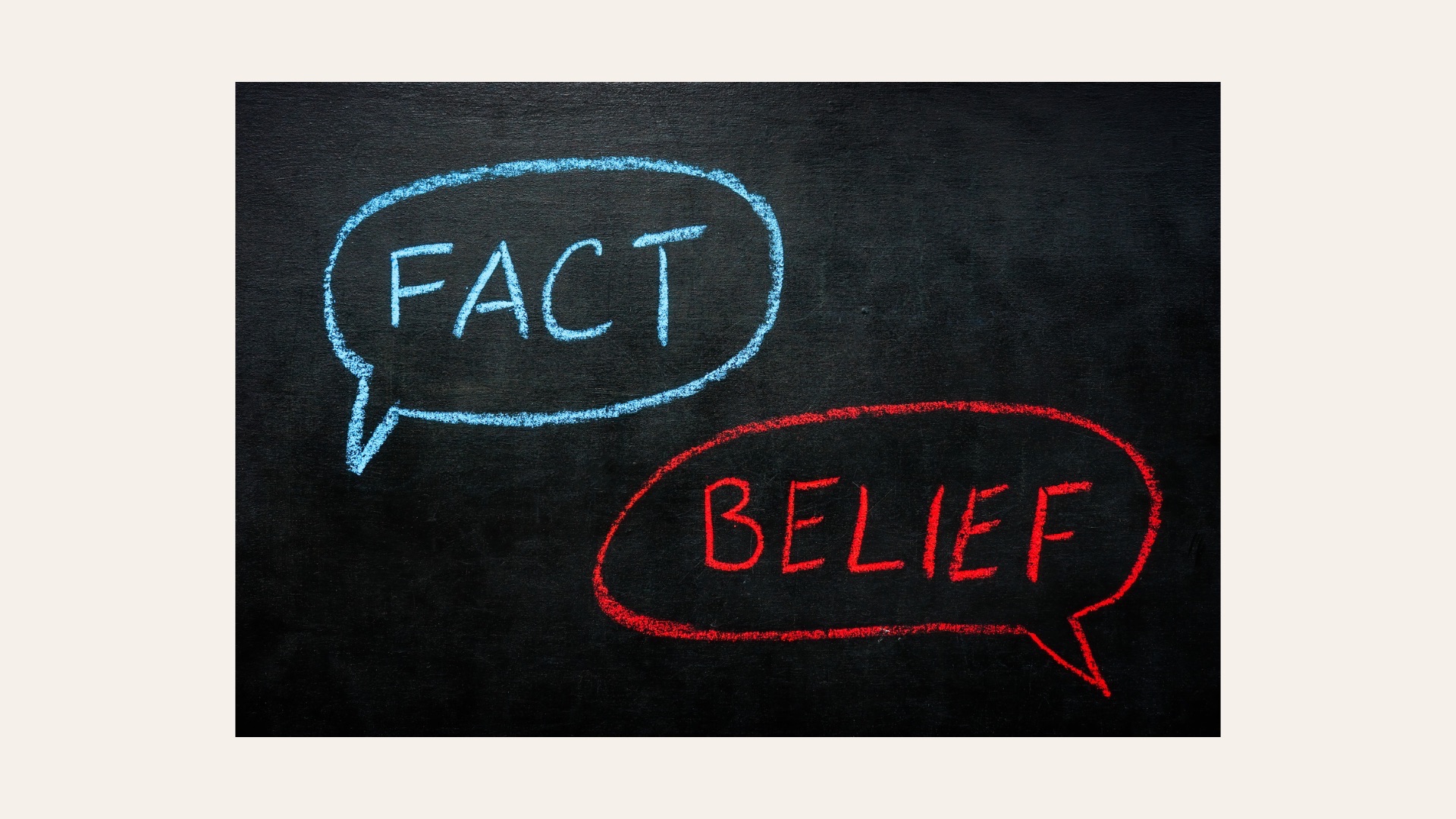
I trained in nutrition first. Back then everything was about food. What to eat, how much, when. The assumption was simple: eat less, exercise more. Give people the right plan and they'll follow it.
Nobody ever asked why they might not.
It wasn't until I trained as a health coach that behaviour was properly discussed, let alone explained. That's despite the fact that most deaths worldwide are now from chronic diseases like heart disease, cancer and type 2 diabetes, and the things that raise our risk most include what we eat, how much we move, smoking and drinking. Behaviour, in other words. And I wasn't the only one hearing it for the first time. My course was full of healthcare professionals, including many doctors, and a lot of them seemed just as new to it as I was. People whose whole careers were about health, and yet the question of why we do what we do, and how that shapes our health, had barely come up.
So I started paying attention to what was going on for people just before they reached for the biscuits.
Usually it was a thought.
"What's the point, I haven't lost a single kilo."
"I've had a hard week, I deserve this."
"I've already started, I feel ashamed of myself, I might as well carry on."
Different thought for every person, but the same shape every time. A difficult feeling, a thought that made sense of it, then the behaviour. The food was the last link in a chain that started somewhere else entirely.
And suddenly a diet plan on its own felt pointless. Not because the plan was wrong, but because it was aimed at the wrong place. Again and again I saw that people couldn't stick to a plan until they had support for what was driving the eating. We keep trying to change the output while the source runs on.
Then I went one layer deeper.
Underneath our thoughts sit our beliefs. I really understood these when I trained in EFT. Beliefs are quieter than thoughts. Harder to spot. Much more deeply ingrained.
Many of them are set early, often in moments that were too much for us as children. We draw a conclusion about ourselves to make sense of what's happening. I'm too much. I'm not good enough. It isn't safe to need things. At the time, that conclusion helps us cope. Then it stays, often for a lifetime, unless we look at it.
With food, it might sound like "I've always been the larger-than-life one." And the thoughts that seem to be about today are often that old belief, still talking.
Why beliefs feel like facts
Psychologists have long documented something called confirmation bias. We naturally notice and remember the evidence that fits what we already believe, and skip over what doesn't. Nobody chooses to do this. It's how human thinking works.
So a belief formed in childhood doesn't sit quietly in storage. It works as a filter. It shapes what we notice, what we remember and what we dismiss. That's why breaking a belief down can be so hard: we've spent decades collecting evidence for it.
Our thoughts and beliefs aren't facts. They're our own unique perspective, built from our own history. And they are shaping our lives.
When I first really understood that, it was terrifying. We all assume our beliefs are true. They're our foundations, our core, the ground we stand on. Realising mine might not be real felt like that ground shifting under my feet. If I wasn't who I'd always believed I was, then who was I?
And at exactly the same time, it was utterly liberating. Because if those beliefs weren't facts, they weren't fixed. Every "I'm just like this" I had carried for decades was suddenly open to question. I didn't have to keep living by rules I'd written as a scared child.
Then we have children.
A mum got in touch with us recently. Her child had been enthusiastically praising another child for something they'd achieved. Loudly, generously, full of joy.
And she heard herself say: calm down.
Nothing was wrong. Her child was being kind. So I asked her what might be sitting underneath her comment. What was she thinking in that moment? And what might she believe that made her want to quieten her child?
I don't know her answer, and only she can find it. But I can guess at what might come up, because so many of us carry something similar. Perhaps the thought was don't be so over the top or this is embarrassing. And perhaps underneath that sits a belief like it isn't safe to take up this much space, being too much gets you rejected or good girls are quiet.
If something like that is there, it isn't her child's belief. It's hers. And in that moment, without meaning to, she was handing it across.
This is how it happens. Research on what psychologists call emotion socialisation shows that how parents react to their children's emotions is a powerful part of how children learn which feelings are acceptable. When an emotion is regularly shushed, minimised or met with discomfort, a child learns that the emotion is a problem to be managed. Over time, they start managing it the way we did.
If we haven't questioned our own beliefs, asked whether they're actually true, still valid in our adult lives and helpful, they raise our children for us. Not because we don't love them fiercely. Just automatically. And for most of us, that isn't how we would ever choose to raise them.
Now the good news.
Beliefs are learned. And what's learned can change. Decades of research on cognitive therapy show that even deeply held beliefs about ourselves can be examined, questioned and shifted, and that when they shift, how we feel and behave shifts with them.
And that mum? She'd already done one of the hardest parts. She caught it. She noticed the words come out and got curious instead of moving on. That moment of noticing is where everything starts. You can't question a belief you can't see.
You get to decide what your child inherits from you. That's not a burden. It's one of the most powerful things you'll ever do.
This week in the Leadership Method Coaching Edition, we're going deep on thoughts and beliefs: finding them, questioning them, and letting go of the ones that were never yours to pass on. If you'd like to join us, we'd love to have you.
Contact Us!
Join our mailing list to receive the latest news and updates from our team.
Don't worry, your information will not be shared.
We hate SPAM. We will never sell your information, for any reason.