Pull up, Mumma. Your children need you to.
big emotions dads emotional health emotional codependency motherhood May 15, 2026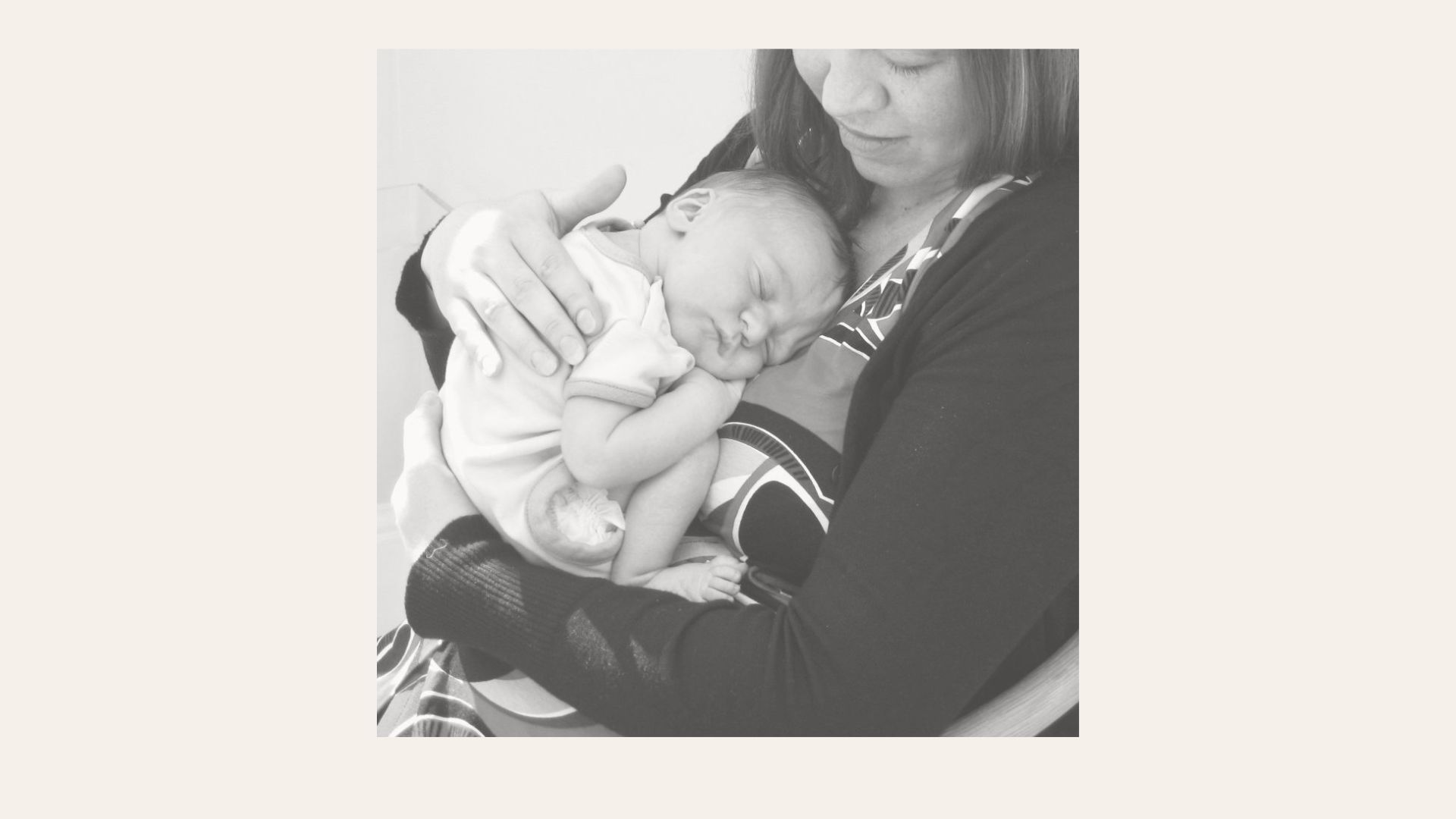
We are told that pregnancy and birth are natural. Natural. I would have taken five rounds with Mike Tyson over my first birth and gladly. At least that comes with a corner team and a bell. After days of labour, when I was finally presented with this tiny person the world had promised me I would instantly, overwhelmingly love, I couldn't even physically lift my arms. I was so completely spent I couldn't hold him. There was no tsunami of love. I was just glad to still be alive.
Maybe, I thought, I wasn't the earth mother I had imagined I'd be. Maybe something was wrong with me. Or maybe not all mothers find this process a breeze.
When the love arrived
The love did come. And when it did it felt so overwhelming. There are no words for it. My heart felt like it was wandering around outside my body with absolutely no means of protection. It felt so vulnerable. I think this is where, for me, the emotional co-dependency started. But how could it not?
I can still remember the exact feeling of hearing my son cry in those early months. I had heard babies cry my entire life. In supermarkets, on planes, in restaurants. It had never even registered. But my own child crying? I could physically feel it activate my stress response. My chest. My throat. My body reacting before my brain had even caught up. It used to make me feel physically sick.
The toxic cocktail
The early days of motherhood handed me a mix I had no framework for. Completely out of my depth. Feeling entirely responsible for how he experienced the world. His distress felt like my failure. His happiness felt like my success. If he was screaming, I was screaming on the inside. If he settled, I relaxed for a moment.
It felt programmed because it was.
This is biology, doing exactly what it was designed to do. When your baby's nervous system fires, yours fires with it. Mother and baby are not two separate systems in those early months they function as one. Your body is doing exactly what it was built to do.
But I think there is an important second layer.
Nature drove me to absorb every emotional state of my children. That was one thing. But I was also raised, as many of us were, to feel entirely responsible for the emotional states of everyone around me. Not just my children. My partner. My parents. My friends. Even the atmosphere at a dinner party. The mood in a meeting. If someone was uncomfortable, it was somehow mine to fix.
I was so programmed. A programme written long before I became a mother.
From the time many of us were small girls we were rewarded for being attuned, accommodating, easy. We were praised for noticing how others felt and doing something about it. We were quietly, consistently taught that keeping everyone else okay was our job. So by the time we became mothers, we had been in training for decades. We arrived already carrying the emotional weight of everyone we had ever loved. Already practiced at making our own needs invisible. Already fluent in the language of coming bottom of the heap.
And then we added a baby whose biology is designed to fuse with us.
That is the double whammy. And it can sink you.
What should happen and what often doesn't
As children grow into their teenage years something should shift. The brain is still under construction, developing the capacity to manage emotions, make decisions and self-regulate. Slowly and messily, they start to build their own internal world. Their emotional orbit naturally begins to expand away from us and towards their peers, towards themselves, towards who they are becoming. They need us less.
As mothers we are supposed to pull back gradually and it feels really uncomfortable. But this is the developmental task of a teen. For them to become less dependent on us, and for us to allow it.
What we see, with many of the mothers we work with, is that this doesn't happen. The child stays central. The mother's internal world continues to be organised entirely around the child's emotional state. If they're okay, she's okay. If they're not, she's not.
I think of it like a plane in trouble. You can see and feel it heading down. You want to shout pull up, pull up. But the mother at the controls can't. She can't pull back because she doesn't know where she ends and her child begins anymore. And what's more heartbreaking is if her child doesn't need her in this all-consuming way, she doesn't know who she is. She has no roadmap for who to be without being needed.
She has never had a life, a purpose, a sense of self that felt like it was truly hers. She was never taught how. Even the life that looks, from the outside, like she grabbed it with both hands, the education, the fabulous career, the family, was built on a different set of instructions entirely. Do well to keep your parents proud. Achieve to keep society satisfied. Perform to keep everyone comfortable. The life that looks like hers was constructed, brick by brick, around what other people needed her to be.
Not one brick laid for herself.
And I say that as someone who was this mother.
My own lovely mum would not have been able to express a need of her own if she tried. She wouldn't know a need if it smacked her in the face. She had a phrase she used. "I just blob about." We all used to laugh. What she actually meant was: I show up wherever and whenever I am needed. That was her life. In her generation even more than mine, women were so thoroughly trained out of themselves that having needs simply had no language. And I watched it, absorbed it, and repeated it in my own life without even knowing I was doing it.
Ironically however, I think her generation did pull back. But not because they were emotionally healthier. For many it was disconnection, not regulation. They had no language for attachment, no parenting books, no social media holding up a ridiculously high standard of what a good mother looked like. There was no comparison, no performance, no public measure of whether she was doing it right. So she could let go with out shame or judgement. And practically, the load was shared. Extended family, neighbours, communities that absorbed children into a wider world beyond their mother. The pulling back happened because the world around them made it possible.
Our generation did something different. We are bombarded with information, we have language for emotional health and neurodiversity, we have an awareness that things have to change. And yet nobody gave us the second chapter. Nobody explained that attunement is supposed to loosen. That staying fused is not the same as staying loving. So we are paying the price for doing it right, with no ongoing instructions.
So many of the mothers we work with carry this double whammy. They know they need to focus on their child's emotional health but have no understanding of how to support their own. Because for a mother to put her own needs first goes against every impulse she has ever been given. The circuitry for her own needs went quiet from years of disuse. Years of giving everything to those around her, for fear of what it would look like to want something for herself. For fear of looking selfish.
So she keeps holding on. She is completely extraordinary and she is terrified.
Letting go would mean facing something she has never faced before. Herself.
Why this matters and what can change
When a mother and child become emotionally codependent neither of them can move. The child cannot individuate. Cannot build their own emotional capacity. Something has to change. And the change has to start with her.
At the centre of everything we do is this. Every single mother walks through our doors for her child, not for herself. Because that is the only door she will open. But what she finds on the other side is herself. Her own needs. Her own purpose. Her own life. And when she finds that, everything changes. Not just for her. For her child. For the whole family system.
Pull up Mumma, your children need you to.
Contact Us!
Join our mailing list to receive the latest news and updates from our team.
Don't worry, your information will not be shared.
We hate SPAM. We will never sell your information, for any reason.