
Obedience over everything.
Apr 24, 2026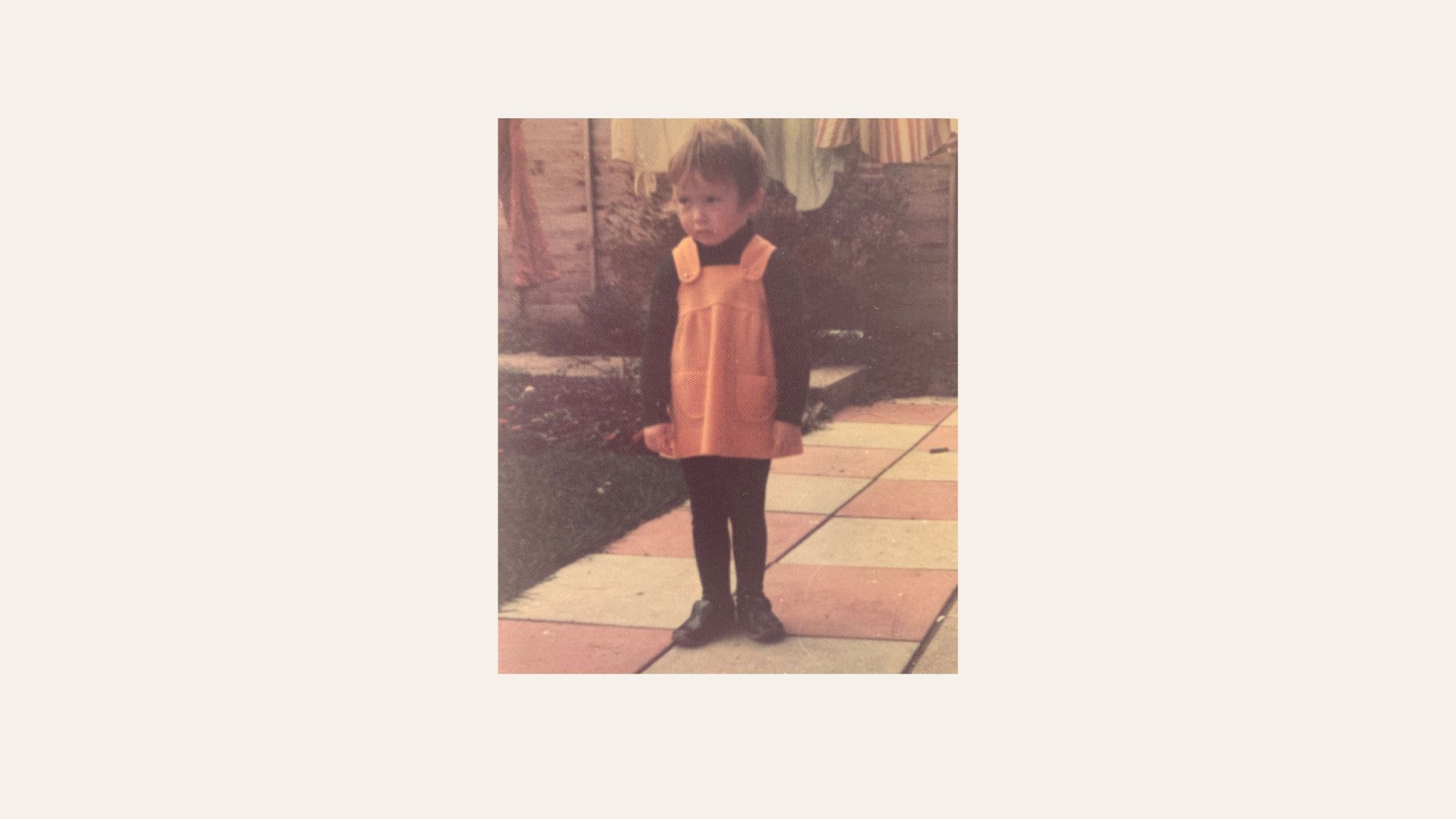
A well-behaved child isn't the same as an emotionally healthy one.
I've been watching The Testaments on Disney+.
It makes me deeply uncomfortable. And yet I can't stop watching.
It's the obedience. The way the whole system is built on it. The way the women in it have learned to suppress, to perform, to smile correctly, to never put a foot wrong because survival depends on it.
And it struck me that for decades we have been raising children this way.
The good girl
I was the child who rarely put a foot wrong.
Not because I was particularly virtuous. But because I had learned, very early, that being good was how you got loved. Being obedient was how you stayed safe. Swallowing your emotions was how you kept the peace.
My compliance was praised. My emotional neatness was rewarded. And so I kept doing it. I got very, very good at it.
What nobody ever told me, what nobody even knew, was that I wasn't developing emotional health. I was developing emotional survival skills. And they have completely different long-term costs.
When I became the parent
I didn't set out to repeat the pattern. Nobody does.
But when my children were small, I felt an almost visceral pull towards compliance. In front of my parents. In public. At birthday parties, at school events. A well-behaved child felt like a direct reflection of me. Of my competence, my values, on my world class parenting!
And when they were, when they sat nicely and said please and thank you and didn't make a fuss, I felt relief. Something that felt like pride, but on reflection was probably more safety.
A quiet child, an obedient child, a child who never makes a scene, we take this as evidence that something is going right. But this is not always the case. Sometimes it's a child who has learned that their emotions are not welcome. A child who has learned to make themselves smaller to feel accepted, to get praised, to avoid conflict, to simply survive.
What the science actually tells us
Expressive suppression, the strategy of hiding or inhibiting emotional responses, carries real physiological and psychological costs. The feelings don't go away. They go underground.
A large-scale study of over 9,000 children and adolescents from Yale Child Study Center found that children who relied on suppression showed more severe mental health symptoms, including attention difficulties, anxiety, and depression.
Research from Washington State University found that when parents suppress their own emotions, children pick up on it, showing less warmth and less engagement in return, even when the parent's external behaviour appears perfectly normal. Researchers call this "emotional residue." Children sense the mismatch between what they're seeing and what they're feeling. And that mismatch has a real impact on a child still learning to trust its own signals.
In other words: suppression is not the same as regulation. It is the opposite of regulation.
A child who has learned to suppress, to perform acceptable emotions while burying the real ones, is not a child who is coping. They are a child who has learned that their authentic emotional experience is not welcome. That love and safety depend on being less themselves.
That was me. That was my children.
Making change
Once I realised this I started to change. I no longer parent for compliance.
I parent for connection.
A child who is emotionally healthy doesn't always look easy. They push back. They question. They have big, inconvenient, badly-timed feelings. They say "I can't cope with this" out loud instead of quietly falling apart later on their own. They refuse things that don't feel right to them, even when everyone else is just going along with it.
A child who can do those things has a relationship with their own internal experience. They trust their own signals. They believe that their emotional world is real and worth communicating.
That is what we actually want.
Emotional health in children doesn't always look like toeing the line. Sometimes it looks like drawing one of their own.
The bigger picture
Even when we make changes at home, we are still sending our children into a world that rewards performance over authenticity.
Schools still largely reward compliance. Social settings still often reward children who don't take up too much emotional space.
Should we not be asking less of our children in terms of performance, and more in terms of how they feel? Should we not be looking for them to feel safe, seen and supported, helping them to prioritise their emotional health from as young an age as possible?
That is exactly what we do inside The Leadership Method. Because we probably can't create this environment for our children until we have done this work ourselves, until we, as adults, have truly accepted that obedience and emotional health do not go hand in hand.
Join The Leadership Method Today. Self Led at your own pace. For less that the price of a therapy session. You lead the change.
Contact Us!
Join our mailing list to receive the latest news and updates from our team.
Don't worry, your information will not be shared.
We hate SPAM. We will never sell your information, for any reason.