
Nobody told my dad he was disabled.
Oct 16, 2026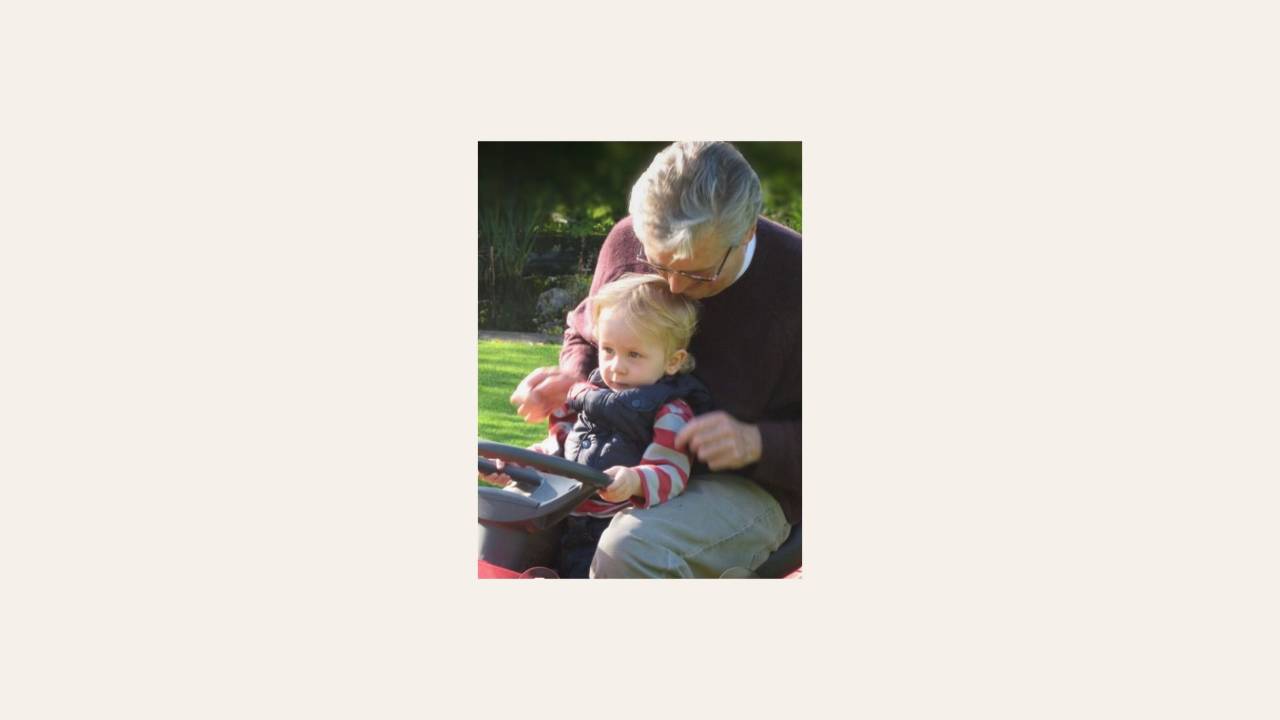
At my dad's funeral we played My Way.
I can't listen to it now without howling. Partly because it's Frank, and Dad loved everything Frank Sinatra. Mostly because my dad really did go through life his way. It wasn't always an easy way, but it was his.
He grew up in Hartlepool without, in his words, a pot to piss in. He failed his 11-plus and was humiliated for it. There was no one at home to soften that or tell him it didn't matter. He left school at sixteen with nothing.
He was one of the brightest men I have ever known.
He taught himself engineering and he was brilliant at it. Big companies, full of degree-educated engineers, would bring their problems to his small business because he could see what they couldn't. He was dyslexic, like Lily and me. Reading and writing were a struggle. Seeing how things worked, and why they weren't working, came easily to him.
He taught us everything we needed to know about neurodivergence and entrpreneurship, without ever using either word.
Why I feel torn
Dad was never diagnosed. He never got extra time or any support, and he paid for that. He grew up short on confidence and self-belief, and it never left him.
Our children get assessed and diagnosed. They get support plans and extra time. I'm grateful for that, because Lily has had help that neither Dad nor I ever had.
But I've come to think Dad became who he was partly because nobody ever called his difference a disability. Nobody told him what he couldn't do, so he didn't build his life around it. The way his brain worked was the thing he had, and he knew it was his way out of poverty. So he used it.
The thing that made him exceptional would now be written up as a disability. I keep asking whether we've got that right.
What the science is starting to say
In 2022, researchers at the University of Cambridge published a paper arguing that dyslexia shouldn't be understood only as a deficit. They proposed that dyslexic brains may be specialised for exploration: searching the unknown, seeing the big picture, making connections and inventing. Other brains are better at refining and repeating what's already known. Their argument is that humans have adapted and survived because we need both kinds of thinking working together.
That was my dad. While everyone else was perfecting the way things had always been done, he was finding a completely new way to solve the problem.
None of this means dyslexia, ADHD or autism are easy. But there's a useful idea called the social model of disability, which says a difference becomes disabling when it meets an environment that wasn't built for it. A brain that struggles to decode text is dis-abled in a system that measures intelligence almost entirely through reading, writing and sitting still. Put that same brain in a workshop with a broken machine and a deadline, and it will be the most able one there.
Dad's self-belief was damaged by a school system that kept telling him he'd failed. His brain was never the problem.
What I question
I don't question the support. I question what we let the label say about our children, and what they then believe about themselves.
We have to be so careful. Some of what we're labelling as a setback may be a set of skills that, in a different environment, would make our kids excel.
I question a school system that still treats one route as the only route. We're heading into a world shaped by AI, and the things that can be automated are the very things schools test hardest: recall, standard written answers, following set procedures. The World Economic Forum's employer surveys keep putting creative and analytical thinking, curiosity and adaptability near the top of the skills that will matter. Our kids often have those in abundance, and they get buried under a report full of "struggles with".
Dad's era wasn't better. It was harsh. But school wasn't treated as everything. You could leave at sixteen and find your own way. Our kids are growing up believing one bad term ruins a life, and a lot of us parents believe it too.
My dad left school with nothing. He built a business, a life, and raised two daughters who used their ND skills to do the same.
I don't want our children growing up the way he did, unsupported and full of doubt. But I don't want them losing what made him extraordinary either. I want them to have both: the support he never got, and the belief that what they have is incredible.
Contact Us!
Join our mailing list to receive the latest news and updates from our team.
Don't worry, your information will not be shared.
We hate SPAM. We will never sell your information, for any reason.