Are We Diagnosing Our Way Out Of The Real Problem
Apr 10, 2026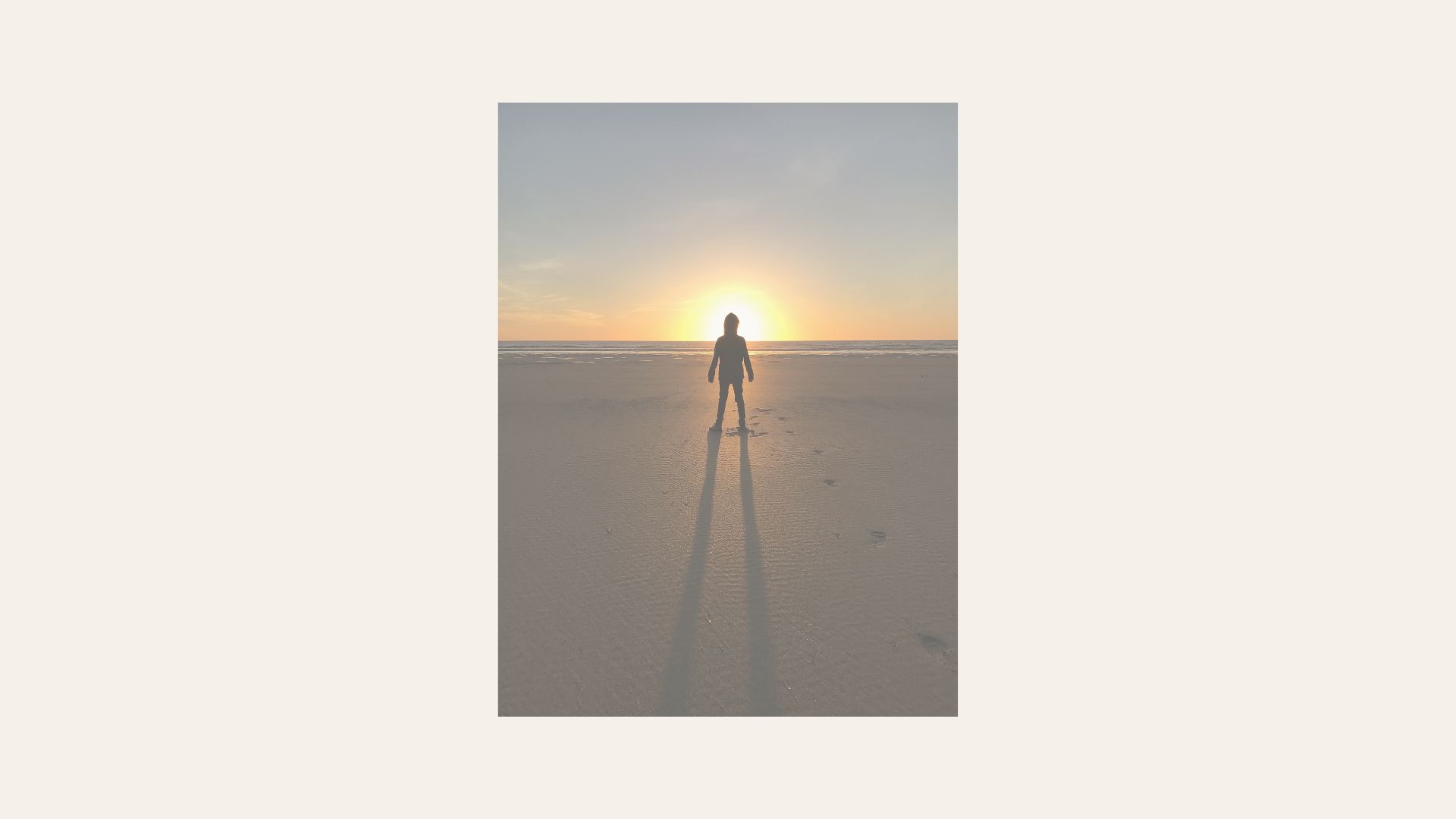
My son has autism.
I've watched him go from a small child whose differences were impossible to miss, to moving through primary school almost invisibly, and then back again, suddenly as a teenager dropped into the wrong environment.
A small nurturing primary school absorbed him. Secondary school, with its size, its phones and rigid expecations did not.
Same child. Same brain. Very different environments.
We are diagnosing more children than ever. Waiting lists are months long. Families are spending thousands to get their child assessed. And I am not going to tell you the diagnosis doesn't matter because it does.
The word "label" gets thrown around like it's something to be ashamed of. It isn't. If your child was labelled a scholar, a linguist, a gifted mathematician nobody would flinch. A diagnosis is knowledge. It gives families a framework, a language, a way to advocate. For a generation that has grown up talking openly about mental health, a diagnosis for them is neither here nor there.
But.
Here is where I think we are getting something very wrong.
We are diagnosing based on behaviour.
That's what the DSM-5, the manual clinicians use, is built on. Observed behaviour. What you can see. What gets reported in a questionnaire filled out by an exhausted parent and a stressed teacher.
Behaviour is the tip of the iceberg.
Below the surface: thoughts, feelings, and biology. And we are largely ignoring all three.
Take biology. Yes, neurodivergent children very likely have a more sensitive biology. But no specific gene has been identified for autism or ADHD. Brain imaging can show differences but the brain is not static. It is neuroplastic. An enlarged amygdala or differences in how the brain prunes its connections at seven may look completely different at fourteen. The brain changes in response to experience, to environment, to everything that happens to it.
There is a concept in health that we use as health coaches: genetics loads the gun, but environment pulls the trigger. In physical health this is now undisputable around 70% of chronic health conditions are driven by lifestyle, not genetics. The body responds to how we live. Why would the brain be any different?
My son's autism is more or less visible depending on what his life looks like.
And this makes sense because our environment shapes everything.
Human beings were built to move, make things, be in nature, exist in small groups where they knew and were known. Our teenagers are sitting still, scrolling, chasing dopamine, eating food that barely resembles food, sleeping badly, never bored, never quiet.
That environment is not neutral. It is not just hard for sensitive children it is pulling the trigger. And we are not talking about that nearly enough.
The other half of behaviour is thoughts and feelings.
Emotional experience shapes the stress response. Disconnection from peers, from parents, from themselves shapes it further. Children who don't have the language or the support to process big feelings will express those feelings through their body and their behaviour. And that behaviour will look, very often, like a diagnosis.
I am not saying the diagnosis is wrong.
I am saying the diagnosis is not the whole story. And when families get the report, the letter, the official confirmation and then nothing changes at home, nothing is explained, no one helps them understand what to actually do the label becomes a ceiling rather than a door.
We are seeing more neurodivergence. Some of that is because we are looking properly, finally, with better tools like seeing more stars when the telescope is invented. Some of it, I genuinely believe, is because the world our children are growing up in is asking more of their sensitive physiologies than those physiologies can give.
This is not a failure of the children.
But there is no point handing out more diagnoses if the environment that exacerbates them never changes.The condition and the context are inseparable.
The work we do at The Emotions Lab sits right here in the space between diagnosis and daily life. We build emotional capacity and environments that actually change behaviour. Not just diagnose it.
Join us for the next round of The Leadership Method - we only have a few spaces left we start again on 22nd April
Contact Us!
Join our mailing list to receive the latest news and updates from our team.
Don't worry, your information will not be shared.
We hate SPAM. We will never sell your information, for any reason.